Building emotional intelligence in early childhood
- Resources
A Montessori education helps the very youngest learners begin to explore different aspects of emotional intelligence.
Each day, and little by little, in the classrooms at Melbourne Montessori College, children build an ‘emotional floor’ that provides a foundation for the rest of their life.
“They begin to build a basic understanding of themselves and the world in those first three years in the Early Learners Program,” says Leanne Tarran, Early Learning Educator.
“They are building their sense of identity, and their self-esteem and self-belief. They realise they can have a go at different things, make mistakes and learn from them.”
The Foundations of Emotional Intelligence: Nature and Nurture
The relatively new field of neuroscience – the study of the development, structure, and function of the brain – offers fascinating insights into a child’s early natural development.
Equally important for a child’s emotional intelligence is ‘nurture’, where the educational and home environments help young children to gradually understand social interaction, self-regulation, and how to resolve conflict when it arises.
“Lots of what we are doing with children can be thought of as ‘emotion coaching’ – we’re helping each child to understand and feel what is going on in themselves,” says Leanne.
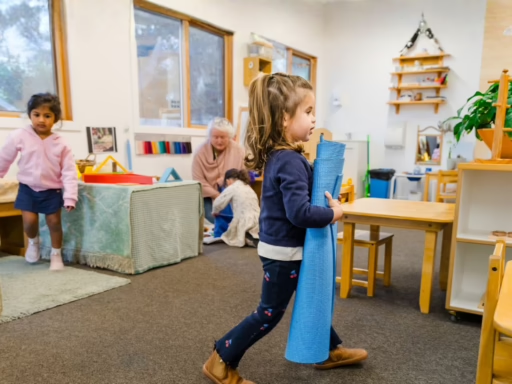
In the Montessori classroom, emotional intelligence is embedded in how children learn, how they work and behave, and how they treat themselves, their classmates, and educators.
“Grace and courtesy are incorporated into everything,” says Zuzana Pacak, Playgroup Leader.
“Children learn to treat their environment with respect because other people are working there, too. They treat the materials and toys with respect by handling them gently and putting them back where they belong so someone else can have a turn to use them.”
Supporting Emotional Growth Through Trust, Struggle and Play
Structured and unstructured play help build the emotional floor that supports children as they progress through school and beyond, and educators provide a calm, balanced presence as children build trust, connections, and independence.
“Everything depends on social and emotional growth. Until a child trusts, feels safe, and is curious, they won’t learn,” says Zuzana.
Establishing safety and trust is a priority when a new child joins the Early Learners Program, and families play an important role in this.
“We help parents to understand how to say goodbye to their child and help the child step through the door into the new world of their classroom. We acknowledge that it is hard but reassure them that they can do it. If they cry, we allow them to feel what they feel and are beside them. That’s the first step in their day and in their learning journey,” says Leanne.
Children also learn that their work is their work, and nobody else can simply take something from them. Some activities are designed to be used by more than one child at the same time, such as playdough and the block table, and then children learn to cooperate, to be considerate of those around them, and to find a respectful way to resolve any disagreements.

Helping children to recognise and work through feelings and frustrations is important in building emotional intelligence, and educators help young children to be able to move on and not remain ‘stuck’ in their frustration.
“It’s not about rescuing them from a struggle, because through overcoming struggle, they learn. But if they’re at the end of their tether, that’s when you need to step in and help them through,” says Leanne.
“For example, when a child is struggling to fit a piece into a puzzle and they’re turning it, trying again, turning it, and the frustration is building, then you watch but don’t help. If they’re about to give up, that’s the time to help a little by saying, ‘You’ve tried that piece a few times – let’s try another piece,’ or ‘Can you see that shape anywhere else?’ The goal is to help as little as possible so the child learns from the inside out how to solve the problem.”
Educators aim to help ‘just enough’, and in ways that support the child’s growing abilities and understanding of themselves and the world.
A Lifelong Journey of Emotional Intelligence
As children move through school, with ongoing support from educators and family, their emotional intelligence deepens, and they become ready to take the next step in their journey within the classroom and in the wider world.