Early words and their lasting impact- Montessori Early Learning Program
- Resources
Montessori’s rich and interactive Early Learning program nurtures communication, encourages expression and helps young minds to build their vocabulary.
From the moment a child joins the Montessori Early Learning program at Melbourne Montessori College, with the support of their educators, begin to foster a love for language and communication.
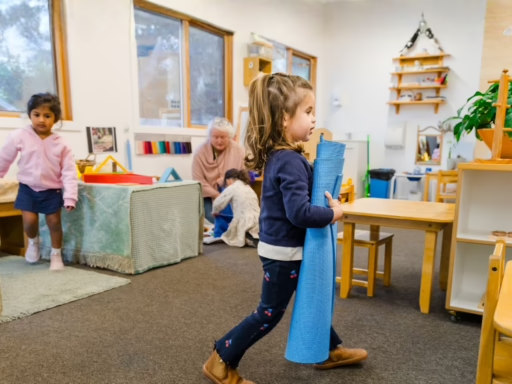
Carefully-designed and interactive environments help children express themselves and their feelings, and to build their vocabulary. Educators talk to children about what they are doing, about the objects they are playing with and how those materials look and feel – with each conversation building a child’s understanding and their ever growing collection of words.
“Other early childhood centres talk to children and read books, but I think the difference is that in the Montessori classroom, any activity can be turned into a language activity,” explains Zuzana Pacak, Playgroup Leader.
“We believe the play of a child is their ‘work’ and we respect their effort in whatever they are doing. So, as they work, we use words and talk to them, knowing the information is all being stored somewhere. We believe a child is never too young to learn.”
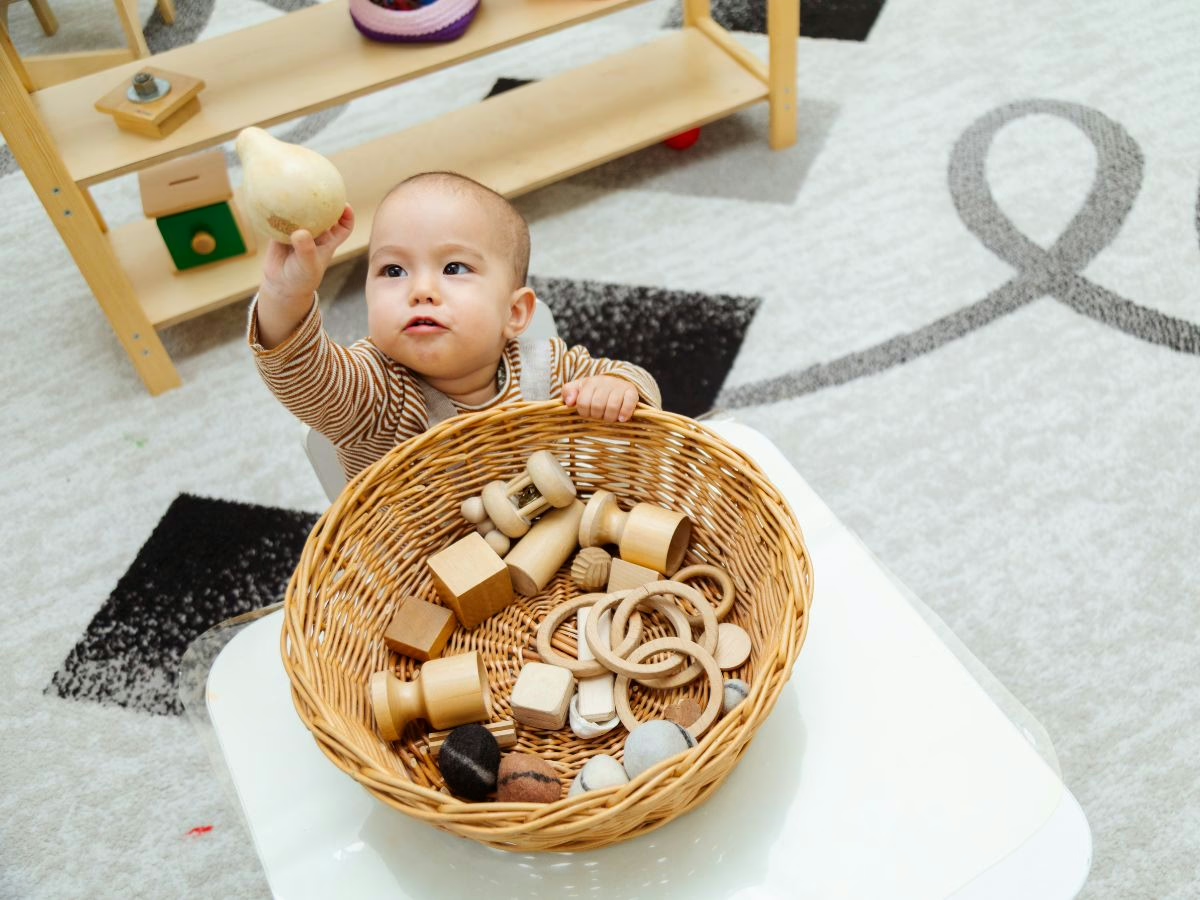
The first elements of an early language development activity can include a child exploring a basket of objects and a parent or educator clearly naming those objects for them. Later, the basket of objects comes with cards – each bearing an identical image of an object in the basket so children can begin to match each item with the correct image.
“For example, the basket may contain a plastic elephant and one card will have an image of a plastic elephant. Following on from that, next the card will have a picture of a baby elephant which isn’t the same as the plastic elephant in the basket, but the child begins to understand that it’s still an ‘elephant’,” says Zuzana.
“So, as well as language development, these activities build cognitive development and critical thinking.”
In the later stages of the early learning program, language may explore colours, such as blue and yellow. Zuzana will show a blue ball and a yellow ball and later she’ll ask a child to put the blue ball in a basket – which demonstrates if they understand what is blue and what is yellow. Finally, Zuzana might point to a blue object and ask the child what colour it is.
“Young children are primed to absorb the language they hear around them, which is why it’s important for educators and families to speak clearly, to use interesting words and to avoid ‘dumbing things down,’” says Leanne, MMC’s Early Learning Educator.
“A young child understands language and meaning way ahead of what they can actually verbalise. So, call a train, a ‘train’ — not a ‘choo-choo train’,” she says.
While talking is important for language development, allowing children quiet time to process what they hear is equally valuable.
“Both speaking and listening are the foundations for reading and writing.” says Leanne.
“Children need to be able to differentiate between sounds and to enjoy speaking and listening before they move on to reading and writing. There is rhythm and rhyme, cadence and music in language and most of all there is connection. We want the gift of language to invite the child towards connection.”
With the best of intentions, parents and families can talk at children, but sometimes the best language activity is silence as they try and figure something out for themselves. In those quiet times they can process what they’ve seen and heard and begin to connect the sounds with what is around them.
“When we try and tell children how to do something, it can suggest you don’t believe they can do it,” says Zuzana.
“The Montessori Early Learning Program difference is that we believe children can do it. We watch and step in when needed, but we help them by not doing everything for them.”
About Our Montessori Early Learning Programs
Melbourne Montessori College offers two rich and nurturing early childhood programs designed to ignite a love of learning from the very start. Our Parent & Toddler Program, led by Zuzana Pacak, supports children aged 18 months to 2½ years as they begin to explore the world around them alongside a parent or carer. Our Early Learners Program, guided by Leanne Tarran, welcomes children aged 2½ to 3 years into an environment tailored for independence, expression and foundational skill-building.
Both Montessori Early Learning programs offer carefully prepared Montessori environments where language development, emotional connection and purposeful play go hand in hand. From matching cards to naming objects, or simply taking quiet time to process the world around them, our youngest learners are supported to grow into curious, confident communicators — ready for the journey ahead.