The Importance of Outdoor Play
- News
By Janis Coffey, Melbourne Montessori College Principal
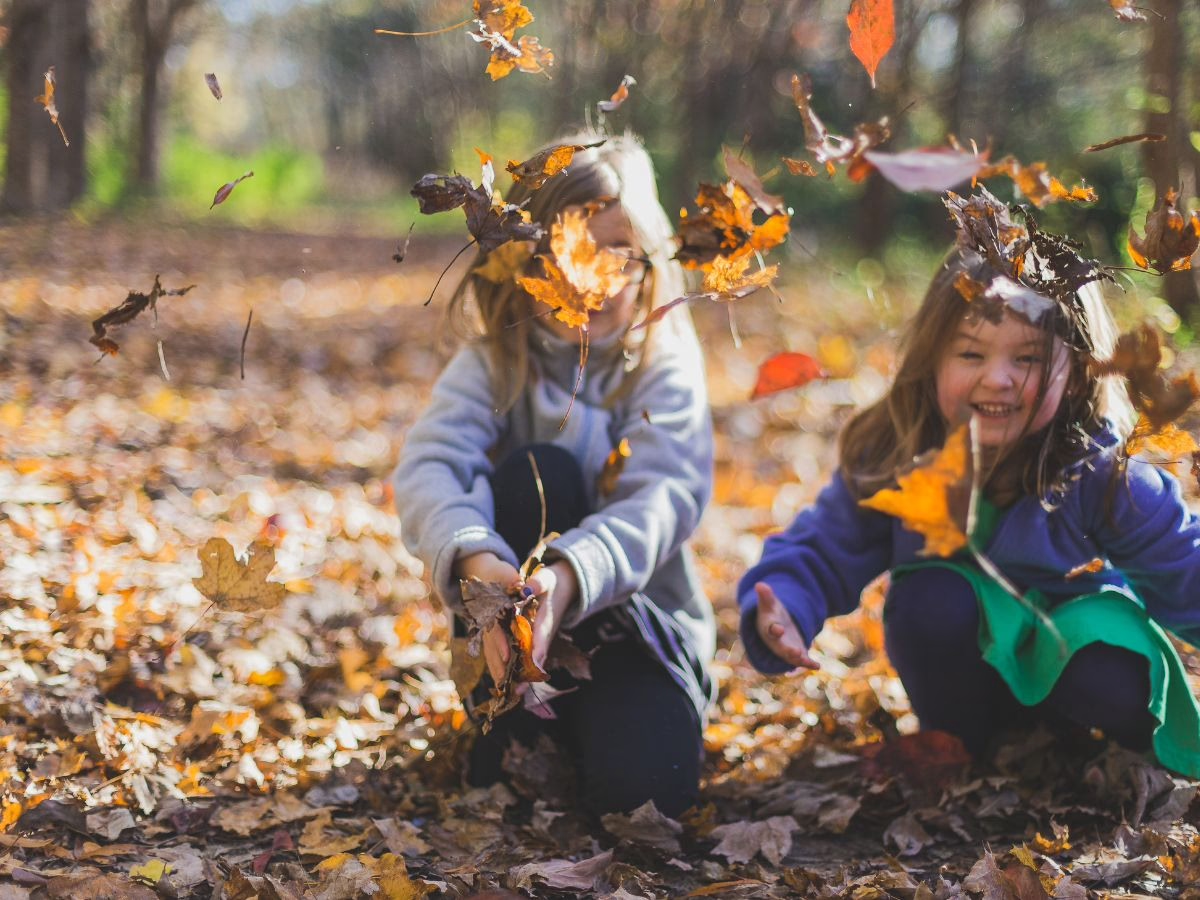
As a child growing up in Philadelphia, I remember playing intricate games of ‘chasey’ with complex rules that we would make up with friends from the neighbourhood. The hours would disappear easily and I would often forget to come home on time for lunch. Most of us have these fond memories of playing outside as children, whether it was exploring play equipment, drawing hopscotch squares onto footpaths, or collecting fallen autumn leaves. Time spent in play is critical to our social development, our creative thinking, as well as our wellbeing. At MMC, we want to nurture the same experiences for our students.
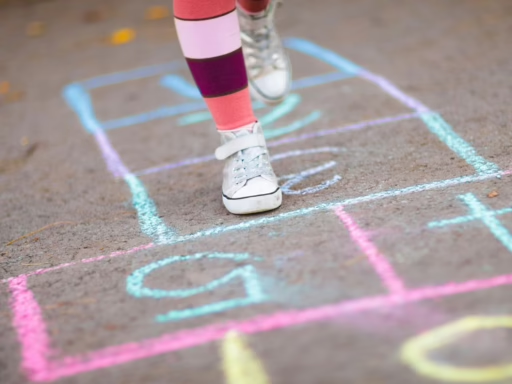
Children engaged in social play will make up games, allocate roles and negotiate if disagreements arise. The freedom found in this kind of independence is empowering and, of course, lots of fun. What we may not realise, however, is how vital these experiences were in our development — and still are for today’s children. Maria Montessori knew this, and research confirms it.
An extension of the indoor classroom
Independent play is an important way for children to socialise, develop rules of games, and, at times, learn to work through conflict with one another.
Self-directed, purposeful outdoor play in natural spaces is also an integral part of childhood development that should be encouraged. The outdoor environment is an extension of the prepared environment, not a separate entity.
Research backs this up. Children demonstrate better attention and inhibitory control following outdoor play compared to indoor play, including in classroom tasks immediately after. Studies of Montessori’s nature-based education reinforce this idea that outdoor play helps children better understand the world around them, and that teachers across early learning settings consistently identify it as central to learning.
Montessori outdoor spaces acknowledge this by encouraging freedom of movement, allowing children to develop coordination, balance, spatial awareness, and physical confidence through practical activity and exploration.
Rather than direct children, outdoor spaces should be thoughtfully designed to enable them to explore, adapt, collaborate, negotiate and problem solve. Like we were as children, they are encouraged to use their imagination.
Natural and age-appropriate design
Outdoor play spaces should be open-ended, inclusive, and use nature-inspired elements that invite calm, purposeful play tailored to the age and stage of a child’s development.
Research shows that time spent in natural outdoor spaces enhances attention, listening, and vocabulary, suggesting they actively support language and communication development. A separate study of pre-schoolers found that outdoor play was positively associated with improved school readiness, and cognitive and psychosocial development, with children who played outside for more than three hours a day showing particular advantages in early learning skills, self-regulation, and social-emotional flourishing.
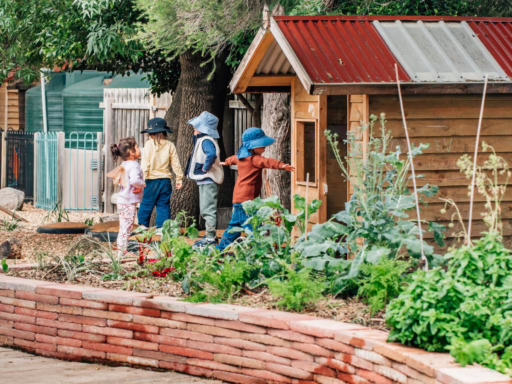
This aligns closely with the three planes of child development that underpin Montessori philosophy. In the earliest years (ages 0-6 and the first plane) the focus is on movement, sensory learning, building independence, order and security. Through primary school (ages 6 – 12 and the second plane), abstract thinking, imagination, justice, fairness, morals, peer relationships and collaboration become the focus. By adolescence (ages 12 – 18 and the third plane), the need for identity and self-expression, emotional regulation, social awareness, and real-world purpose takes over. All of which the outdoor environment is uniquely placed to support.
A unique opportunity
Outdoor learning has also been shown to reduce stress in primary-aged students, improve mood, and foster self-confidence and a sense of efficacy in adolescents.
With all of this in mind, the MMC Foundation Gift Giving Campaign, We Take Play Seriously, aims to fund new outdoor play spaces at our Caulfield and Brighton campuses.
Investing in these new spaces is investing our children’s learning. The physical spaces are part of the prepared environment for students and integral to their development. They impact our pedagogy, as well as the wellbeing of students.
Just as in the indoor environment, the new outdoor learning materials and spaces will be set up to support students’ social, emotional and academic development.
As always, the student voice will be central to this collaborative project. We will invite students to contribute drawings, ideas and experiences they want to see in their educational environment.
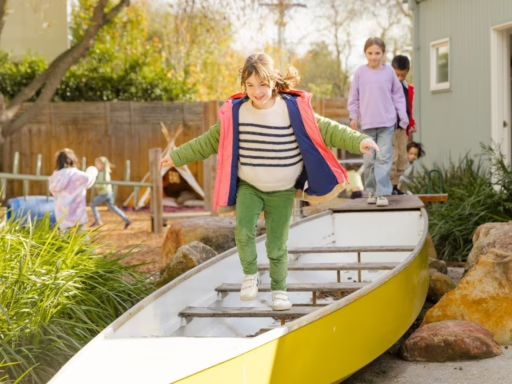
Spaces that invite curiosity, and provide opportunities for socialisation, particularly for older students, are critical. For younger children, play spaces should ignite curiosity, create opportunity for language and physical development.
With this project, we have a unique opportunity to create a safe, engaging and educational outdoor environment for our students, while reminding parents and carers of what they enjoyed as children.
We Take Play Seriously donations can be made here until 30 June.
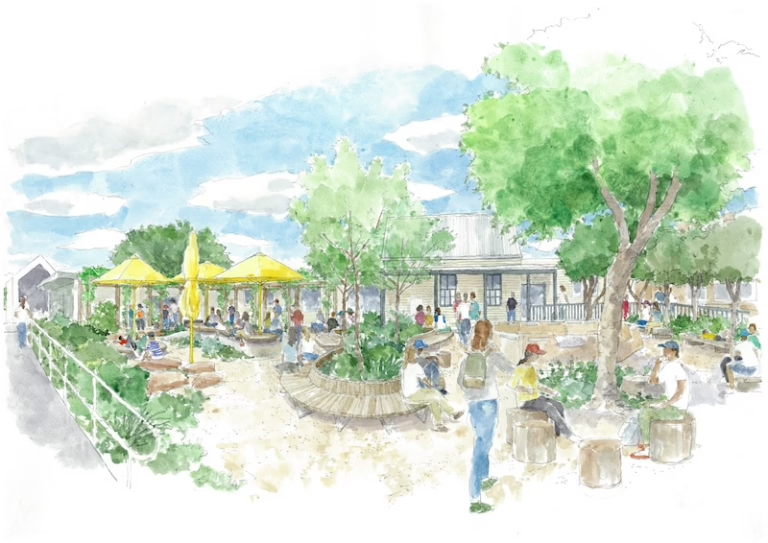
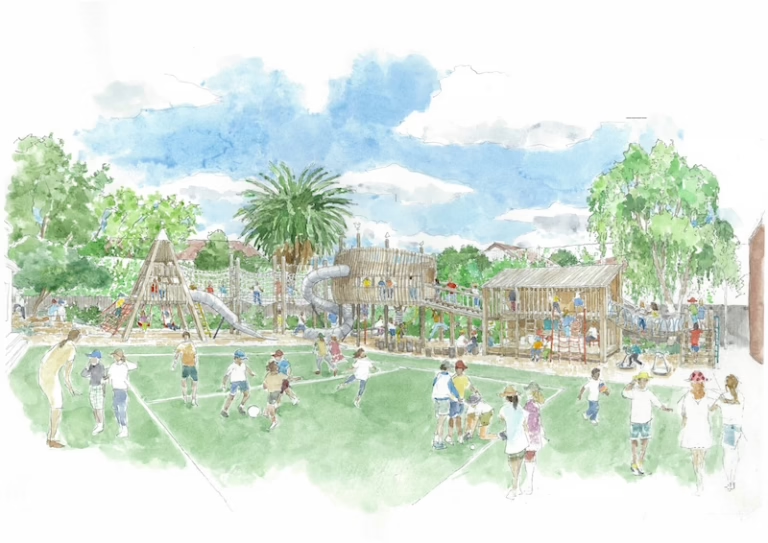
CONCEPT DRAWINGS ONLY.