The Science of Reading
- Resources
The Science of Reading – The Montessori Way
More schools are introducing programs focused on the ‘science of reading’ to strengthen reading and literacy outcomes, but this has been part of the Montessori classroom for generations.
The ‘science of reading’ is a phrase that frequently appears in education research and discussions about how to support children as they begin the fascinating journey of learning how to read and write.
While there’s no single definition, the term refers to the evidence-based process that children take, and the techniques and tools they use, as they learn to read fluently. It relies on a number of proven strategies, such as phonological awareness – recognising different speech sounds, and decoding, which is when students learn to associate particular letters or groups of letters with a specific sound.
Language comprehension is equally important. This is built through the development of a broad vocabulary, language structures and grammar, and the verbal reasoning skills that allow young minds to draw conclusions from what they read and explore.
Generations of knowledge and expertise
These foundations of building deep reading and literacy capabilities have been embedded in Montessori classrooms for generations.
“When Maria Montessori designed her curriculum more than 100 years ago, she considered all the elements of the science of reading to be important,” explains Melinda Kan, Learning and Teaching Leader.
“In Montessori schools across the world, there has been a systematic approach to reading with explicit instruction on the shape and sounds of letters and the phonetic building of words, including mastery of two and three letter sounds and studying words that cannot be sounded out.
“Exposure to information about the world and true stories about people and cultures are also an important part of the reading journey and, as in the science of reading, comprehension and vocabulary building are also essential to the Montessori curriculum.”
building on a child’s natural ability
An essential strength of the Montessori approach to reading and literacy is that it builds on a child’s natural ability to absorb language during the sensitive period from birth to six-years-old, a stage of development when children learn language most easily and instinctively, says Manojini Gamage, 3 and 4-year-old Kinder and Prep Leader at Melbourne Montessori College.
“Montessori literacy is hands-on, child-led and multi-sensory and it allows children to learn at their own pace and according to their individual readiness,” she says.
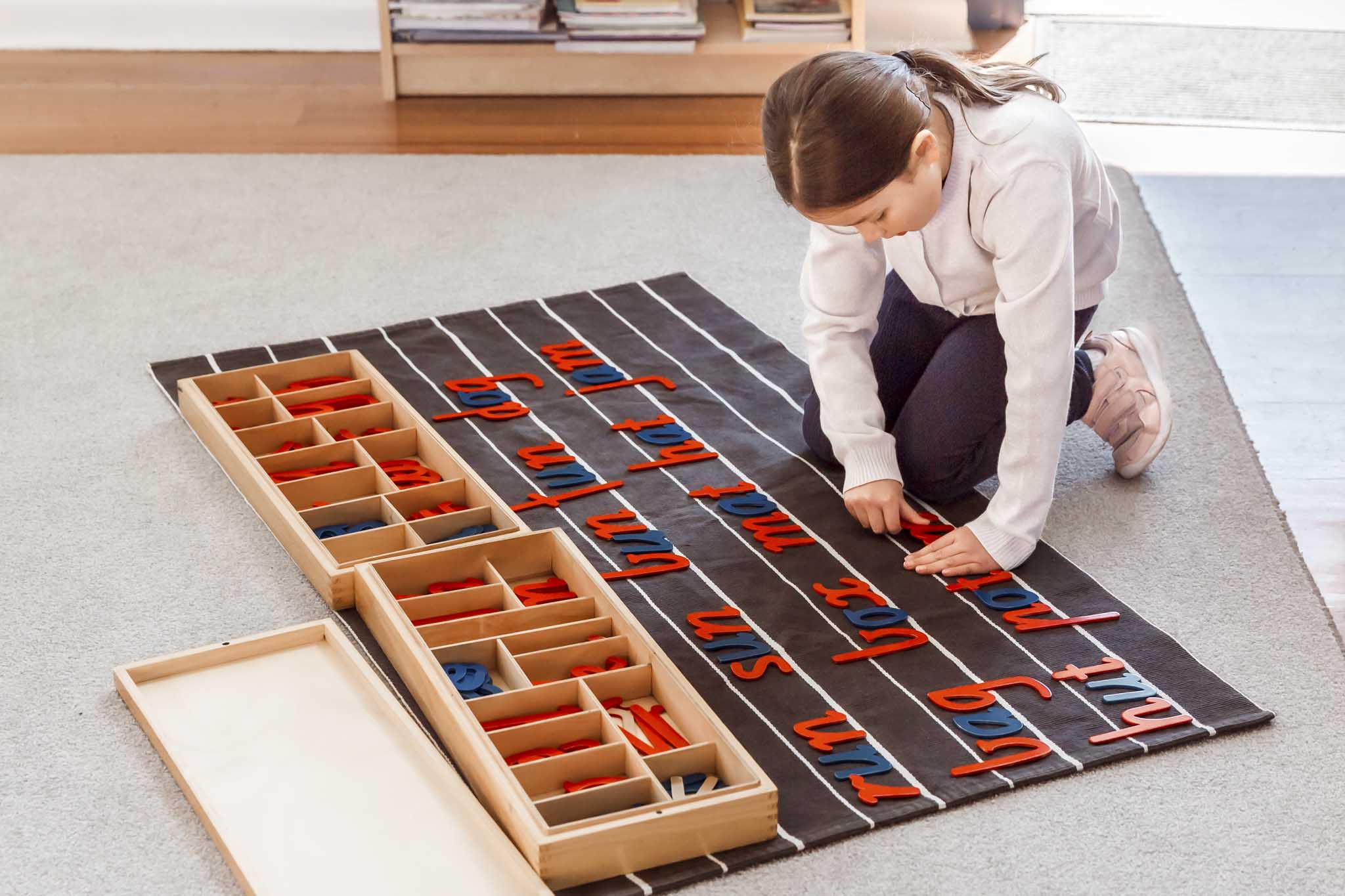
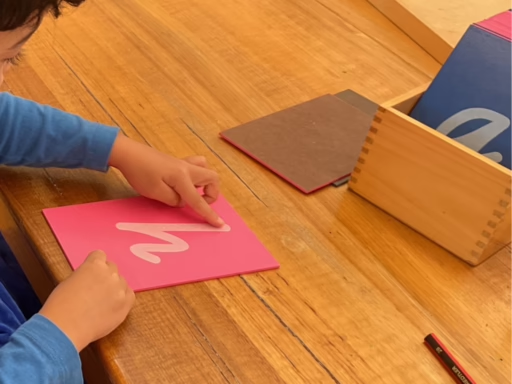
“The Montessori classroom provides a language-rich environment and uses concrete, tactile materials such as sandpaper letters, moveable alphabets and labels to connect sounds, symbols and meaning. Each child’s interests are also observed and followed to naturally introduce new vocabulary.”
Montessori literacy is hands-on, child-led and multi-sensory and it allows children to learn at their own pace and according to their individual readiness,
Connecting with a child’s own interests
In 3 and 4-year-old Kinder and Prep classrooms, oral language and sound awareness skills are built through storytelling, songs, rhymes, I Spy games, phonetic cards and conversations. Literacy is also brought to life through connections to specific interests. If a child is fascinated by animals or trains, the vocabulary cards, books and writing activities they use in the classroom will reflect into those passions and deepen their engagement.
“By keeping it meaningful and hands-on, children are motivated, engaged and proud of what they are learning,” explains Manojini.
As students reach Years 1, 2 and 3, everything they do at Melbourne Montessori College is designed to inspire them to want to read. The stories they hear and the activities they take part in are a gateway to developing interest in the world around them – from the solar system to insects and ancient civilisations, says Melinda.
“If they are stimulated by a topic, perhaps flowers or photosynthesis, the child has the freedom to read more on the topic and curate their own research poster. The thirst for knowledge and sharing what they have discovered for themselves gives children a purpose to want to read.”
By keeping it meaningful and hands-on, children are motivated, engaged and proud of what they are learning.
From Moveable Alphabets to Grammar Boxes
Montessori’s unique materials embed strong literacy skills and understanding. Moveable Alphabets help students to explore suffixes, prefixes, compound words and word families. Grammar Boxes introduce parts of speech and provide small amounts of text for children to read and build their word knowledge and vocabulary, and punctuation lessons support comprehension and expression as students read.
Each class also has a set of specific skill-based comprehension readers with task cards to enhance the reading journey.
“As a Montessori teacher, I believe reading and writing are not just school subjects. They are tools that help children to think clearly, express themselves and understand the world,” says Yasmin Chetty, Years 4 – 6 Teacher.

Children as authors of their own message
One of Montessori’s most profound insights into the literacy journey is that writing naturally precedes reading.
“When a child first writes, they are not waiting to understand someone else’s message – they are creating their own message,” explains Yasmin.
“They experience themselves as authors before they are readers. Children see that their thoughts can be turned into words and that builds confidence and independence. Reading then becomes a joyful discovery rather than a test.”
In Years 4, 5 and 6, literacy is strongly connected to real-life learning, so children read and write about history, science, geography, inspiring people and events and they research topics of interest, prepare presentations, write reports, create poetry and express their opinions.
“Reading becomes purposeful. it is not just practice, but participation in the real world”, says Yasmin.
“When a child prepares a presentation on an ancient civilisation for example, they read deeply, take notes, write summaries, organise ideas and speak confidently to their peers. Literacy becomes a tool for thinking and sharing knowledge.”
The science of reading is grounded in strong research and effective practice and it shares many similarities with the powerful literacy teaching and learning methods that have been in Montessori classrooms for generations, and that continue today.
Reading becomes purposeful. It is not just practice, but participation in the real world.

If you’d like to read more, click here.