What is resilience and why does it matter?
- Community
- Resources
By Melinda Kan, MMC learning and teaching leader
Resilience is toughness and the capacity to withstand, or recover quickly from, difficulties.
As children of the 1970s, we prided ourselves on being tough. Walking barefoot on hot pavements, climbing onto any roof we could access, jumping on the trampoline for as long as we could and envisioning getting into the Guinness World Records book while planning the rules around food and toileting.
We spent many hours with our friends, riding bikes around the streets and along the beach tracks which we called the ‘torture tracks.’ We climbed trees as high as we could and our play equipment was metal – it was hot in summer and freezing in winter. Back then, cars didn’t have seatbelts and, in the summer, the four of us would roll around in the back of our parent’s station wagon.
Each of us can have very different childhood experiences and memories. But there are certain things that are important to all children at different ages.
Children in the three-to-six-year-old age band need predictability, routine and concrete experiences. They need time to repeat, to make choices between a few things, and an environment where they can do things for themselves.
Children aged six to 12-years love to challenge themselves physically and mentally. They love a sense of adventure and spontaneity and they love being with friends. But we can hinder their realisation by judging their attempts and failures, by solving all their problems, and by worrying so much about their safety that they feel afraid to try anything new, fun or silly, rather than offering an environment that quietly supports independence, invites challenge, and allows them the space to figure things out for themselves (known as the prepared environment).
Rules were brought in to protect children’s safety and designs became more user-friendly for good reason. But the child’s need to explore and nurture the person they are to become hasn’t changed.
Resilience grows when children feel loved, capable and trusted. They need to have the space to struggle a little, rather than always feeling rescued. A warm, strong attachment to the adults in their lives enables the child to take the chance to try hard things. Calm adults who model how to handle mistakes make them feel safe to be adventurous and to handle difficult situations.
Resilience grows when children feel loved, capable and trusted.
Resilience is not avoiding failure, but learning to rise after setbacks. Failure is an opportunity to learn and grow. In Montessori we also call it ‘friendliness with error’. Strength-based parenting names and nurtures a child’s existing qualities like kindness, persistence or curiosity. This gives the child a positive way to look at themselves when they face stress and reduces avoidant and less positive coping strategies.
Each time the parent stays close, listens and coaches problem-solving skills rather than fixing everything, the child discovers that they are capable, they can manage disappointment, and they will feel in control of their emotions and different situations. They will feel empowered to make choices in all sorts of scenarios, and see their part in that and their ability to lean towards a positive direction.
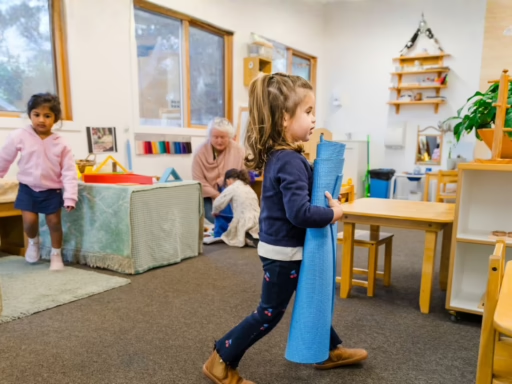
Montessori’s vision for the child was self-construction. Dr Maria Montessori observed that children’s resilience grew when they were provided with a prepared environment where they could be supported and empowered to make choices and learn through their experiences.
Through explicit instruction on how to do things for themselves, they had the keys to caring for themselves and their environment. Their sense of self and confidence grew when they were given the space to explore through purposeful work and the opportunity to learn through successes and mistakes.
Their sense of self and confidence grew when they were given the space to explore through purposeful work and the opportunity to learn through successes and mistakes.
Relationships in their class community strengthened through Grace and Courtesy lessons and through developing a mutual respect for themselves and the environment. When we allow time for the child to do for themselves, we give them the feeling that they are capable and trusted and this sets them up to handle life’s bigger challenges.
Each time a child discovers joy and enthusiasm through their own efforts, even when things are hard, they are quietly shaping a self who can meet life’s problems with hope and inner strength. Look at your child and imagine the adult they will become – this is the creation in action every day.