What 6–12-year olds really need from school
- Resources
Curious minds and growing independence.
Maria Montessori observed that “The child is both a hope and a promise for mankind.” This vision comes to life in the Montessori Junior School years, when children aged six to twelve enter the Second Plane of Development.
At this stage, they experience profound intellectual, social, and moral growth. A Montessori classroom is carefully prepared to meet these needs, ensuring students grow into confident, capable, and compassionate learners with life skills that are just as important as academic ones.
Understanding the Second Plane of Development
Children in this stage move from the absorbent mind of early childhood to the reasoning mind of middle childhood. They begin to:
- Ask big-picture “why” and “how” questions
- Imagine beyond what they can see and touch
- Develop strong social bonds and group loyalty
- Feel a deepening sense of fairness and justice
For educators, these changes are obvious to see. Kate Grierson, Cycle 2 Montessori Educator at MMC’s Caulfield Campus (Montessori Junior School), has noticed how children at this stage want more autonomy and are no longer satisfied with simply knowing what happens. They push deeper, wanting to understand why things happen. She also sees them drawn to what she describes as “big work,” projects that are more abstract, ambitious, and often shared with peers.
As she explains, “The children seek more independence and autonomy over their work, and they become more curious about why things happen, not just what happens. They start finding out their own interests and passions, start working more abstractly, and are more interested in ‘big work.’ The Second Plane is very peer-oriented, with children wanting to work in pairs or groups, and there’s a keen sense of justice and fairness.”
How Montessori classrooms meet these needs
1. Big-picture, integrated learning
Montessori’s Cosmic Education gives children the framework to see how everything is connected. Instead of learning subjects in isolation, history, science, geography, maths, and language are presented as part of one story.
Kate highlights the importance of the “First Great Story,” which tells the creation of the universe. “It tends to spark interest in students who then go on to create passion projects based on space and geographical features of Earth, such as volcanoes.” She has seen this single story launch weeks of exploration, with children independently researching, writing, and building models.
2. Opportunities for collaboration
Because children in this stage are socially driven, group projects are a natural focus. They thrive when they have ownership over the subject matter and freedom in how to present their work.
Kate remembers a recent project cycle where students had “complete creative freedom in their topic and how they presented it.” She points out that no two outcomes were alike, with some students producing posters, others crafting dioramas with puppets, and others building 3D models. Beyond the variety of outputs, what mattered most was the collaboration, the negotiation of ideas, and the sense of shared accomplishment.
3. Moral development and social responsibility
With their strong sense of justice, children are ready to think about fairness, empathy, and shared responsibility. Montessori Junior School classrooms deliberately create space for these conversations and for daily practices that reinforce them.
Kate describes how her students balance this developing sense of justice with empathy and problem-solving. “The use of ‘grace and courtesy’ lessons are helpful in providing modelled examples, storytelling, and role play. Students are given responsibilities such as class clean-up jobs, so everyone has a sense of equal contribution to the classroom environment.” These moments help children learn that fairness is not just about rules but also about kindness, respect, and responsibility to others.
Real-life examples in montessori Junior School
The principles of the Second Plane are not abstract theories. They translate into practical, hands-on projects that matter to children and to their communities. For example,
- Year 4 Montessori Junior School students take on responsibility for the school’s recycling program, learning about sustainability while managing the day-to-day logistics.
- Year 5 students mentor Year 2s in reading or maths, strengthening their own skills while also building confidence in younger learners.
- Year 6 students create a community garden and present their work to local council, combining science, sustainability, and civic engagement.
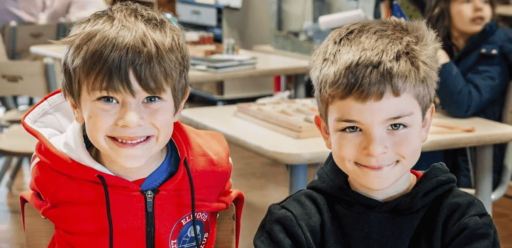
Kate has seen how these experiences shape her students’ sense of purpose. She explains that projects like these allow children to practise fairness, teamwork, and initiative. They feel the satisfaction of contributing something real, not just completing an assignment for school.
Is Your Child in the Second Plane?
Parents often notice subtle signs that their child is ready for more independence. A seven-year-old might suddenly start asking “why” questions that demand reasoning, while a ten-year-old could show frustration when rules seem unfair. These are signs of the Second Plane emerging.
Five key indicators include:
- Seeking out group activities and enjoying shared goals
- Asking complex questions that require reasoning
- Showing empathy and advocating for fairness
- Wanting input in planning their learning or projects
- Connecting new learning to broader world issues
Kate sees these traits regularly in her classroom in our Montessor Junior School. She notes how children become more passionate about group work, justice, and responsibility for their own learning. These changes, she believes, signal that they are ready for a different kind of schooling, one that respects their growing independence and curiosity.
Why It Works for the Whole 6–12 Age Range
The Second Plane is a continuum. A child in Year 1 at a Montessori Junior School may be taking first steps into independent research, while a Year 6 student is refining leadership skills and applying knowledge to real-world challenges.
At MMC, mixed-age classrooms and integrated lessons support this journey across Junior School. By the end of Year 6, students have not only built strong foundations in core subjects but also learned to think critically, collaborate effectively, and contribute meaningfully to their world.
The Heart of What They Really Need
Maria Montessori believed that education must prepare the whole child for life, not just for the classroom. This philosophy is evident in the way Junior School meets the needs of 6–12-year-olds. Every lesson, conversation, and project fuels curiosity, nurtures independence, and guides the moral compass.
These are the years when children learn not just what to think, but how to think, act, and care. By meeting them in the Second Plane of Development, we give them what they truly need from school: the skills, confidence, and purpose to step into the world as thoughtful, capable, and compassionate human beings.