A parent’s guide to the adolescent years
- Resources
How to support independence without letting go
Parenting a teenager is a dance of boundaries and freedom, presence and space. You want to trust their growing independence, but still guide them through the complexity of these years. At MMC, we walk this path alongside our families.
We understand that adolescence is not just about letting go. It’s about knowing when to step back, and when to lean in.
Understanding the Third Plane
Adolescence is often described as turbulent, but in Montessori education it is understood as a critical and purposeful stage of growth. Maria Montessori wrote, “Adolescence is a time of creation. It is not only a time of growth, but above all a time when the human personality is created.” It is during these years that young people begin to question who they are, how they belong, and what they can contribute.
From ages 12 to 18, students are undergoing major shifts:
- Physiologically, emotionally and neurologically
- Questioning identity, beliefs and belonging
- Seeking increasing autonomy while still needing security
A Montessori Senior School education responds to these needs through:
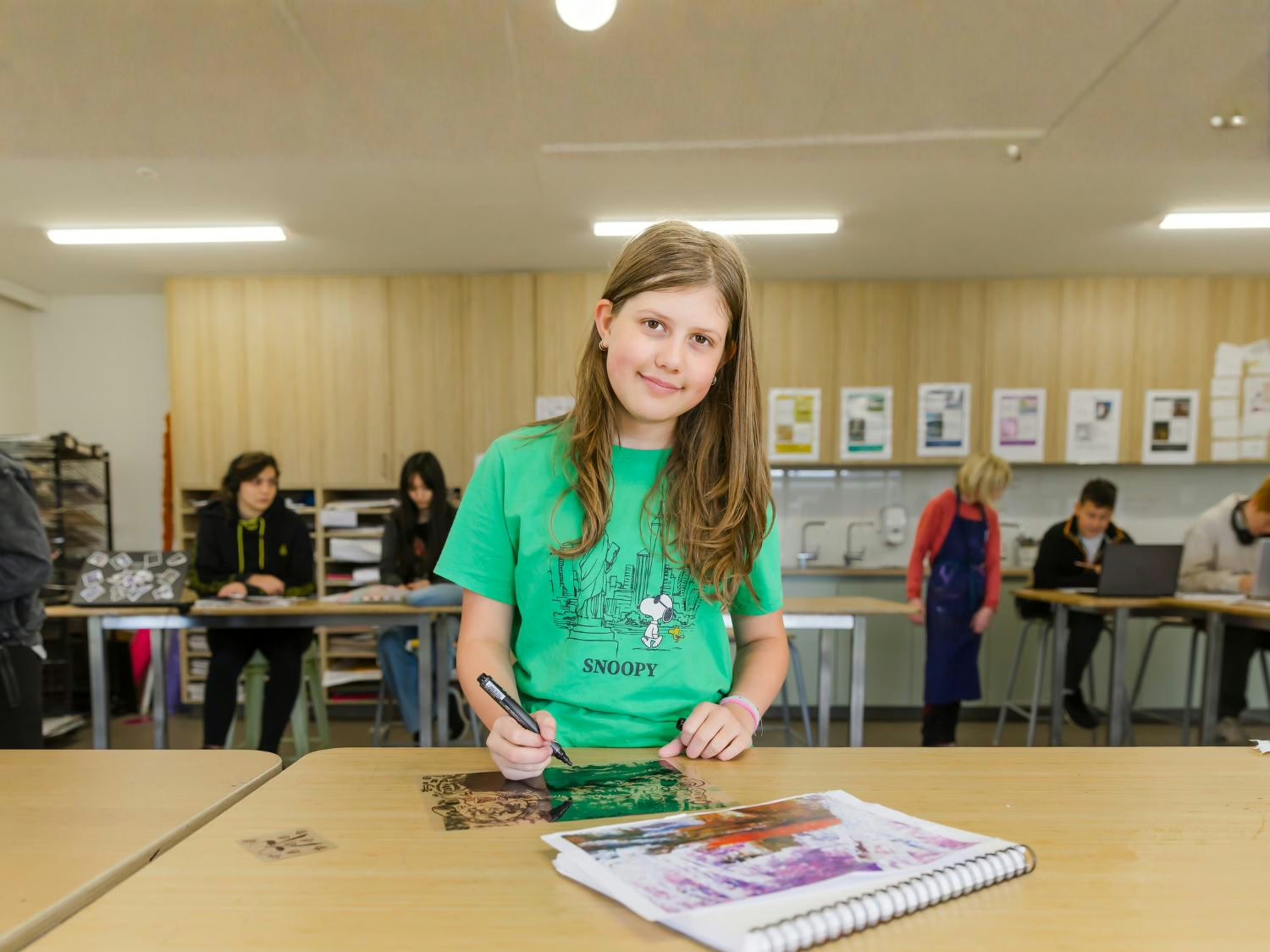
- Responsibility-based learning (e.g. planning their own projects, managing timelines)
- Mixed-age environments, where students develop leadership and peer mentoring
- One-on-one guidance, where teachers act as mentors, not monitors
This balance between independence and support is at the heart of adolescent development. The teenage years are not about pulling away entirely, they are about creating an environment where young people feel trusted to explore, but also know there is a safety net if they need it.
MMC teachers are guides who know when to step back, and when to offer structure. This mentoring approach ensures that students learn responsibility without feeling abandoned.
Practical tips for parents: a parent’s guide
Here are some tried and tested, Montessori-aligned strategies to try at home:
1. Replace questioning with conversation
Try: “What was something interesting you learned today?”
Avoid: “Did you finish all your homework?”
2. Invite input on decisions
Let your teen help plan family meals, choose part of a weekend activity, or manage their own morning routine.
3. Let natural consequences teach
If your child forgets their sports shoes, resist the urge to rush it over.
Empathy + accountability = learning
4. Share your learning
Modelling curiosity and growth (e.g. “I read something today that really made me question my thoughts on…”) shows them that adults are still evolving too, and that’s OK.
5. Encourage real-world responsibility
Look for opportunities for your teen to take on meaningful, age-appropriate responsibilities. This could include managing their own public transport to school, budgeting for a personal goal, cooking dinner once a week, or helping with a home improvement project. Responsibility builds self-worth.
6. Keep emotional check-ins regular (and light)
Adolescents often feel deeply but struggle to articulate those feelings in the moment. Instead of pressing for “deep chats,” try checking in during shared, low-pressure moments, such as in the car, walking the dog, or over a snack. Keep the tone open: “You seemed a bit off yesterday…all good, or want to talk it through?” This approach builds emotional literacy and trust over time.
At MMC, we encourage parents to see these moments not as tasks, but as ongoing conversations. When families model curiosity, responsibility and openness at home, they reinforce the same values we are nurturing at school. It creates a strong partnership, and young people notice that consistency.
Why this matters
As a Montessori parent, your role isn’t to control. Instead, it’s to coach, support, and stand steady as your teen explores who they are becoming. Together, and with this parent’s guide, we can create a community that empowers the next generation of independent, grounded and compassionate adults.
Remember that independence is not the opposite of connection. It is, in fact, built on trust. When young people feel supported, they step into independence with confidence rather than fear.
That’s the foundation for becoming resilient and compassionate adults.